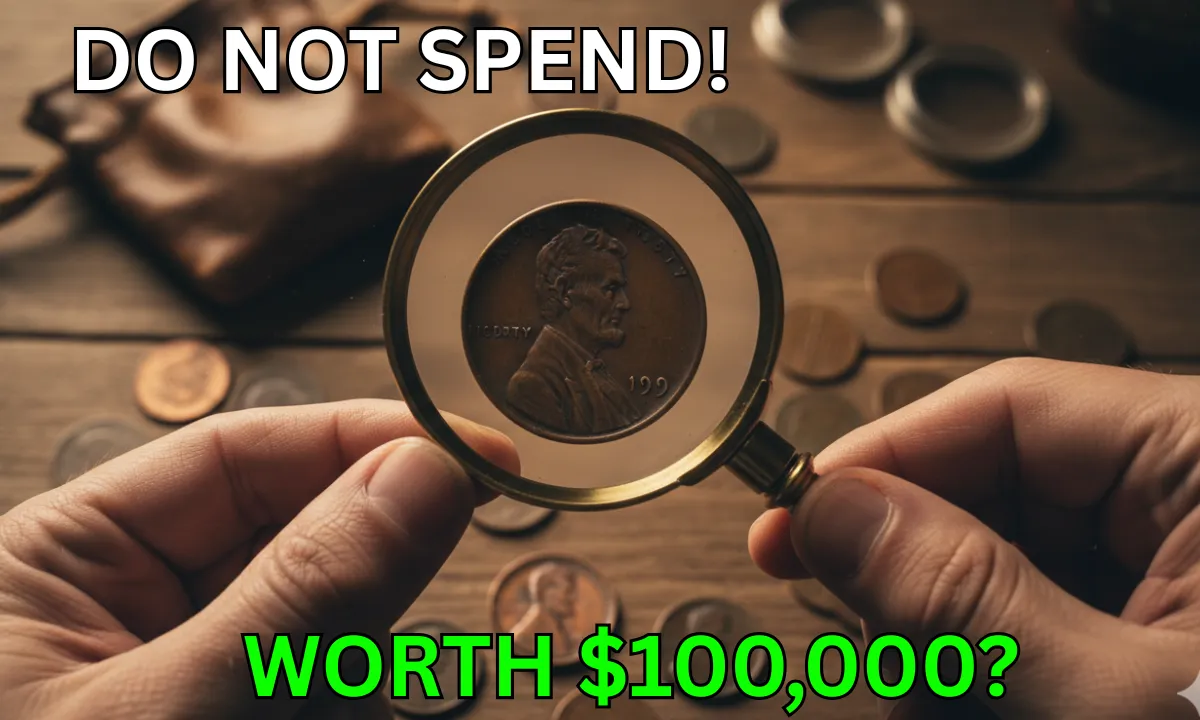
The Lincoln Wheat Penny is arguably the most iconic piece of currency in American history. Introduced in 1909, it broke long-standing traditions and transformed the way the United States viewed its coinage.1 Today, these small copper discs are more than just “cents” they are miniature historical artifacts that continue to fuel a multi-million dollar hobby.
A Revolution in American Coinage
Before 1909, U.S. coins featured symbolic figures like Lady Liberty.2 The Lincoln Penny changed everything. To honor the 100th anniversary of Abraham Lincoln’s birth, the Mint commissioned Victor David Brenner to design a coin featuring the 16th President.3+1
The obverse featured Lincoln’s now-legendary profile, while the reverse showcased two stalks of durum wheat, symbolizing a period of national growth and prosperity.4 This design remained the standard for nearly half a century, until it was replaced by the Lincoln Memorial design in 1959.
The VDB Mystery and Early Rarities
The release of the penny wasn’t without drama. Brenner placed his initials, “V.D.B.,” at the bottom of the reverse side.5 Public outcry regarding the size of the initials led the Mint to remove them just days into production.
This created an instant collectible: the 1909-S VDB. Because the San Francisco Mint produced only 484,000 of these before the initials were scrubbed, it remains the “Holy Grail” for many collectors, with high-grade versions worth tens of thousands of dollars today.6
Wartime Curiosities: The 1943 Steel Penny
One of the most fascinating chapters in the Wheat Penny’s history occurred during World War II. In 1943, copper was needed for shell casings and war infrastructure.7 Consequently, the Mint produced pennies made of zinc-coated steel.
- The Error of the Century: While most 1943 pennies are steel (silver in color), a few were accidentally struck on leftover copper planchets.8 These 1943 Copper Pennies are among the most valuable coins in existence, often selling for over $100,000 at elite auctions.9+1
Key Dates: What Should You Look For?
If you are searching through an old jar of coins, keep an eye out for these specific “Key Dates” and mint marks:
| Year/Mint | Significance | Potential Value (Circulated to Mint) |
| 1909-S VDB | Lowest mintage in the series | $700 – $25,000+ |
| 1914-D | Extremely rare survival rate | $150 – $5,000+ |
| 1922 “No D” | A die error resulting in no mint mark | $500 – $10,000+ |
| 1931-S | Low mintage during the Depression | $60 – $500+ |
| 1955 Doubled Die | Obvious “ghosting” of the date | $1,000 – $15,000+ |
How to Determine the Value of Your Pennies
Not every Wheat Penny is a gold mine. Most common dates from the 1940s and 50s are worth between 3 and 10 cents in average condition. Value is determined by three main pillars:
- Rarity: Was the coin part of a low-mintage run?
- Condition (Grade): Is the wheat detail sharp, or is the coin worn flat? Professional grading (like PCGS or NGC) can drastically increase a coin’s marketability.
- Mint Mark: Small letters (“S” for San Francisco, “D” for Denver) found under the date can change a coin’s value from a few cents to hundreds of dollars.
Frequently Asked Questions (FAQ)
1. Are all 1943 silver-colored pennies valuable?
Most 1943 steel pennies are worth between 25 cents and $5, depending on their condition. While they look unique, they were minted in large quantities. The truly valuable 1943 pennies are the rare copper errors.
2. Should I clean my old Wheat Pennies to make them look better?
Never clean your coins. Using chemicals or abrasives removes the original “luster” and can decrease a coin’s collector value by 50% or more.10 Collectors prefer original patina, even if it’s dark.
3. How can I tell if my 1955 penny is the “Doubled Die” variety?
Look closely at the date and the words “In God We Trust.” On a true 1955 Doubled Die, the doubling is so severe that it is easily visible to the naked eye, appearing as if the numbers were stamped twice.
4. Where is the best place to sell Wheat Pennies?
For common dates, local coin shops or online marketplaces are best. For high-value key dates (like the 1909-S VDB), it is recommended to have the coin authenticated and sold through a reputable auction house.