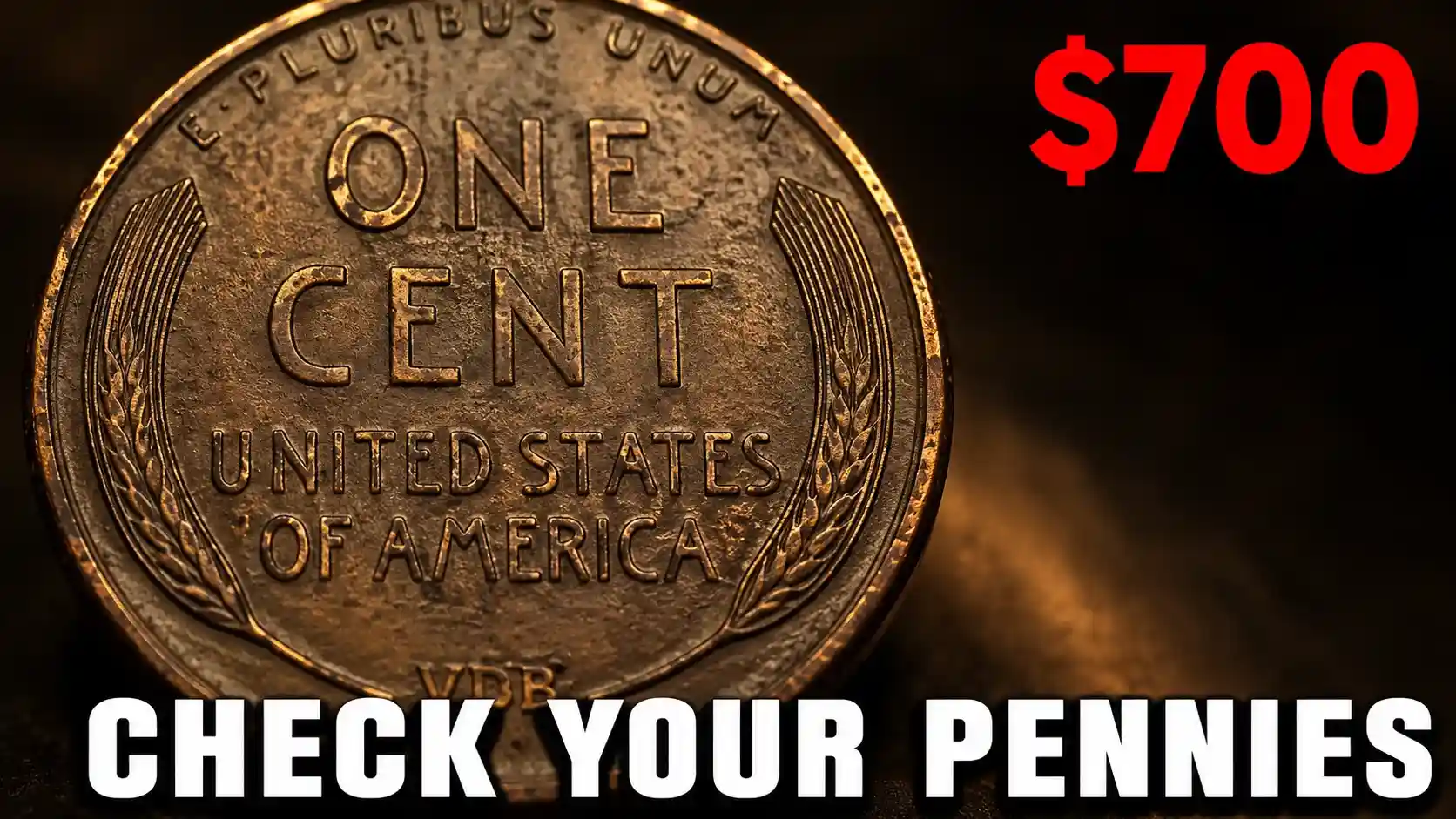
Let me ask you something. When’s the last time you actually looked at the pennies in that old mason jar on your shelf? Not glanced — looked. Because somewhere in America right now, someone is about to drop a coin worth $700 into a vending machine. And that’s a tragedy no numismatist should have to witness.
We’re talking about the Lincoln Wheat Cent — better known as the wheat penny — minted from 1909 to 1958. These small copper coins are arguably the most collected coins in American numismatic history, and for very good reason. Most circulated wheat pennies are worth between 3 cents and $1. But key dates, rare mint marks, and notable error varieties can command hundreds — or even thousands — of dollars.
So before you spend another one on a parking meter, let’s break down exactly what you’ve got. And what it’s worth.
A Brief History Worth Knowing
The Wheat Penny was designed by sculptor Victor David Brenner and introduced in 1909 to honor the centennial of Abraham Lincoln’s birth — a decision made personally by President Theodore Roosevelt. It replaced the Indian Head Penny and went on to become the longest-running coin design in U.S. Mint history.
The obverse reads IN GOD WE TRUST above Lincoln’s profile, with LIBERTY to the left and the date to the right. On the reverse, two stalks of wheat flank the words E PLURIBUS UNUM — which is exactly how this coin earned its nickname.
Three mints produced wheat cents throughout the series: Philadelphia (no mint mark), Denver (D), and San Francisco (S). Philadelphia struck roughly 14 billion coins. San Francisco struck just 2.75 billion total across all 49 years of production. That single fact explains why an S-mint coin from the same year as a Philadelphia coin can be worth ten times more.
The Four Factors That Determine Value
Before you pull up any value chart, understand this — four things control what a wheat penny is worth, and you need to know all of them.
Year. The year is your starting point. Some years had mintages in the hundreds of millions. Others were struck by the tens of thousands. Scarcity drives value, always.
Mint Mark. That tiny letter — or absence of one — under the date is everything. Philadelphia coins are the most common. San Francisco coins are almost always worth more. Denver sits in the middle. If you see an “S” under the date on an early-era coin, pay close attention.
Condition (Grade). A coin’s grade is the multiplier on everything else. The difference between “Good” and “Mint State” can mean the difference between $10 and $3,000 on the exact same coin. Most circulated wheat pennies fall in Good to Fine condition. Grade has a dramatic impact on key dates especially.
Errors and Varieties. Some of the most valuable coins in existence exist because someone at the mint made a mistake. The 1943 copper penny. The 1955 Doubled Die. The 1922 Plain. These errors made ordinary coins into extraordinary paydays — and we’ll cover them all.
Wheat Penny Value Chart by Year
Here’s your complete reference. Key dates are marked. Values shown are approximate retail prices for coins in Good (G-4), Fine (F-12), Extremely Fine (EF-40), and Mint State (MS-63) condition.
| Year / Mint | Good | Fine | EF-40 | MS-63 | Notes |
|---|---|---|---|---|---|
| 1909 (P) | $0.15 | $0.25 | $0.75 | $20 | Common first year |
| 1909 VDB (P) | $12 | $15 | $22 | $60 | Brenner initials, Philadelphia |
| ⭐ 1909-S | $100 | $125 | $175 | $425 | Key date — low mintage |
| ⭐ 1909-S VDB | $700 | $850 | $1,200 | $3,000 | Holy Grail of wheat pennies |
| 1910-S | $10 | $14 | $28 | $110 | Semi-key |
| 1911-S | $22 | $30 | $60 | $200 | Scarce S mint |
| 1912-S | $18 | $26 | $55 | $175 | |
| ⭐ 1914-D | $200 | $280 | $550 | $2,500 | Major key date |
| 1914-S | $8 | $14 | $30 | $150 | |
| 1915-S | $12 | $18 | $40 | $175 | |
| ⭐ 1922 Plain | $500 | $700 | $1,500 | $7,000 | No mint mark error |
| 1924-D | $18 | $28 | $70 | $425 | Scarce Denver |
| 1926-S | $10 | $18 | $55 | $500 | |
| ⭐ 1931-S | $100 | $120 | $150 | $225 | Depression-era key |
| 1933-D | $6 | $10 | $22 | $100 | Low mintage |
| 1934 (P) | $0.15 | $0.20 | $0.50 | $12 | Common era begins |
| 1940 (P) | $0.10 | $0.12 | $0.30 | $5 | Very common |
| 1943 Steel (P) | $0.10 | $0.25 | $0.75 | $10 | WWII zinc-steel cent |
| 1943-S Steel | $0.25 | $0.50 | $1.50 | $18 | Slightly scarcer |
| 1944 (P) | $0.10 | $0.15 | $0.35 | $5 | Copper resumed |
| 1950-D | $0.10 | $0.15 | $0.40 | $8 | |
| ⭐ 1955 DDO | $1,200 | $1,500 | $2,500 | $15,000 | Famous doubled die error |
| 1957 (P) | $0.10 | $0.12 | $0.30 | $4 | |
| 1958 (P) | $0.10 | $0.15 | $0.35 | $4 | Final year of series |
The Key Dates — Coins That Can Change Everything
1909-S VDB is the Holy Grail. When Brenner’s initials appeared on the reverse of the first San Francisco coins in August 1909, the Mint Director ordered them removed within ten days. Only 484,000 were struck before production halted. Today, even a worn example trades for $700. A Mint State piece sells for $3,000 or more.
1914-D is the rarest Denver mint wheat penny from the early era. In Good condition, expect around $200. In Extremely Fine, $550 or better. Mint State examples regularly cross $2,500 at auction. Beware: altered date fakes exist — authentication from PCGS or NGC is essential before buying or selling.
1922 Plain exists because only Denver minted cents that year, and a severely worn die left some coins with no visible “D” at all. No mint mark, no Denver marking — just a blank field where the “D” should be. These trade at $500 in Good condition and $7,000 in Mint State.
1931-S came during the darkest days of the Great Depression, when the San Francisco Mint struck just 866,000 cents. That scarcity is very real today. In Good condition, these trade around $100 — making it one of the most affordable key dates in the series.
The 1943 Steel Penny — America’s Strangest Cent
In 1943, the U.S. Mint switched from copper to zinc-coated steel to conserve metal for World War II. The result was a silvery cent unlike anything minted before or since. Standard 1943 steel cents in circulated condition are worth $0.10 to $1.00 — common as dirt.
But here’s the legend. A small number of 1943 cents were accidentally struck on leftover copper planchets from 1942. One of these copper cents sold at auction for over $1 million.
Here’s how to test yours: hold a magnet near your 1943 cent. Steel cents will stick. Copper cents won’t. If yours doesn’t respond to the magnet and it’s clearly dated 1943, stop everything and take it to a certified numismatist immediately. Don’t clean it. Don’t show it around town. Just go.
The reverse situation is equally valuable: in 1944, copper resumed — but a handful of steel planchets from the previous year were accidentally used. A genuine 1944 steel cent, which does stick to a magnet, can fetch $75,000 or more.
Error Coins Worth Big Money
Beyond key dates, these four error varieties are the ones every collector needs to memorize:
1955 Doubled Die — Dramatic, unmistakable doubling on the date and lettering. Worth $1,000 in circulated condition, $15,000 or more in Mint State. Fakes exist — authenticate before celebrating.
1943 Copper — Doesn’t stick to a magnet. Potentially worth $100,000 to $1 million depending on condition and documentation. Get it verified immediately.
1944 Steel — Sticks to a magnet in a year when copper was standard. Extremely rare. Worth $75,000 or more.
1922 Plain — No “D” visible on a coin that was only minted in Denver. Worth $500 in Good condition, $7,000 in Mint State.
Always authenticate suspected rarities through PCGS or NGC before assuming value. The fee is small. The peace of mind — and the protection against being cheated — is priceless.
What To Do If You Think You Have Something
Never clean your coins. Ever. Cleaning destroys numismatic value permanently. A cleaned 1909-S VDB worth $700 becomes an $80 novelty. Leave it exactly as you found it.
Sort your collection by year and mint mark. Pull out anything dated before 1934, anything with an “S” mint mark, and anything that looks unusual. Run the magnet test on every 1943 and 1944 cent you own.
For key dates and anything potentially valuable, get certified coins from PCGS or NGC. Certified coins consistently command 20–50% premiums over uncertified “raw” coins at major auction houses like Heritage Auctions and Stack’s Bowers.
For common wheat pennies from 1934–1958, coin dealers typically pay face value to a few cents each. Selling bulk lots on eBay often yields better returns from collector buyers who want to pick through them.
The wheat penny series ran for just 49 years. But it left behind a collecting passion that has endured for over a century. Most of what’s in that old jar is worth a nickel. One coin — the right year, the right mint, the right condition — can be worth more than a car.
Go check that mason jar. You never know what’s been sitting there since 1943, waiting for someone who knows what they’re looking at.
Values are approximate retail prices as of 2026. Always consult current auction results or a certified numismatist for high-value coins. PCGS and NGC are the industry-standard grading services.