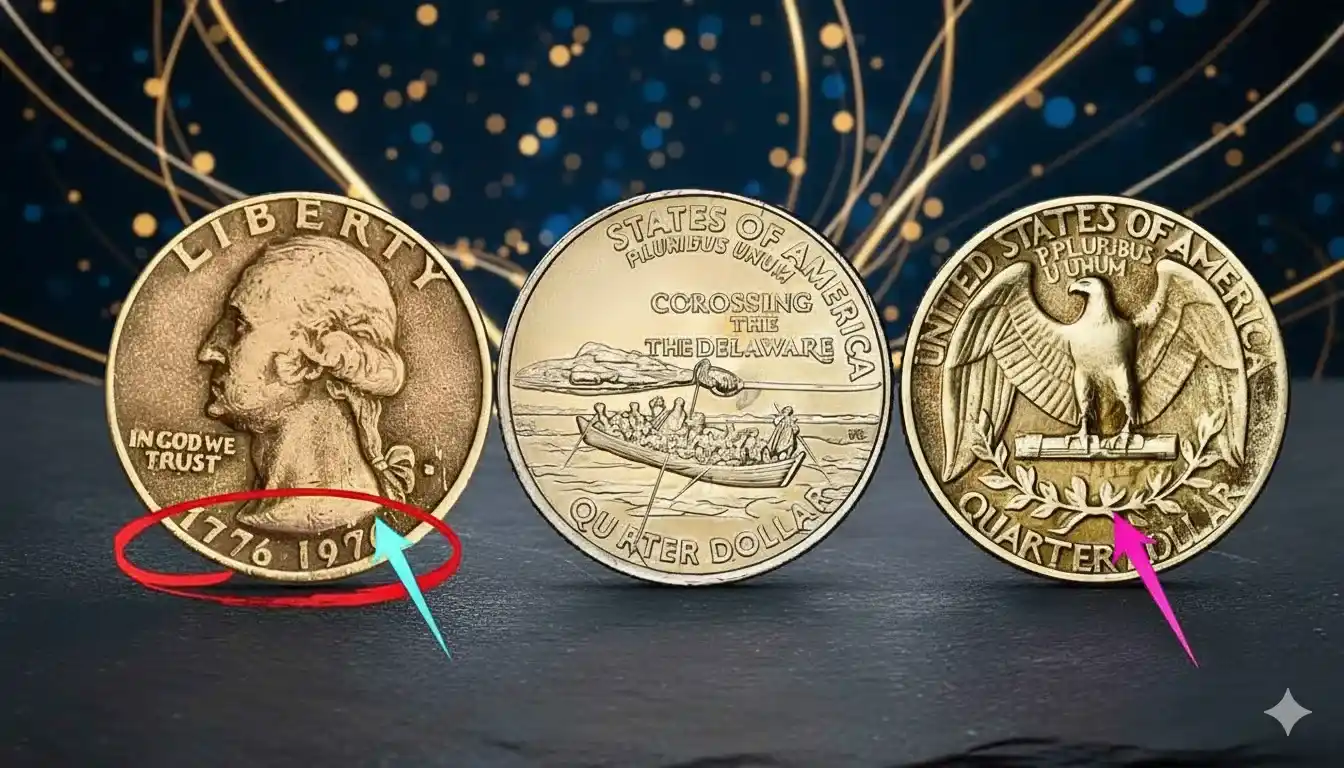
The year 1976 marked a milestone in American history: the United States celebrated its 200th anniversary of independence. To honor the occasion, the U.S. Mint released a special series of Bicentennial coins. Among these, the Bicentennial quarter became the most widely recognized and circulated.
Instead of the traditional eagle reverse, the coin featured a colonial drummer designed by Jack L. Ahr, along with a torch surrounded by thirteen stars. The obverse displayed the dual date 1776–1976, a clear reminder of the bicentennial celebration.
While these quarters were widely used as currency, many Americans collected them as keepsakes. Today, certain varieties and conditions make some of these coins particularly valuable to collectors.
Philadelphia No Mint Mark Quarter
The Philadelphia Mint produced Bicentennial quarters without a mint mark. These coins were struck in massive numbers, making them common in circulation. For most people, these quarters are worth only their face value.
However, collectors know that condition is critical. A Philadelphia Bicentennial quarter in pristine uncirculated condition can be worth significantly more. Coins graded MS67 or higher are rare and can sell for hundreds of dollars. Sharp details, clean surfaces, and no wear make high-grade examples especially desirable.
For collectors who enjoy searching through rolls of quarters, the Philadelphia issue offers a rewarding pursuit.
Denver Mint Quarter
The Denver Mint issued Bicentennial quarters with a D mint mark. Like the Philadelphia coins, these were produced in large numbers, but high-grade examples are prized by collectors.
Denver quarters often have stronger strikes, which appeal to those who appreciate detail. Rare error varieties, such as doubled dies or off-center strikes, can significantly increase a coin’s value. Collectors often compare Denver and Philadelphia coins side by side, noting subtle differences in strike quality and finish.
For anyone building a complete Bicentennial set, the Denver quarter is essential.
San Francisco Clad Proof Quarter
The San Francisco Mint produced clad proof Bicentennial quarters specifically for collectors. These coins were never intended for circulation, yet some have entered everyday use.
Proof coins are recognizable by their mirror-like fields and frosted devices, creating a visually striking contrast. Most clad proofs are affordable, but condition remains important. Coins graded PR69 or PR70 are rare and command higher premiums. Collectors often seek these proofs to complete Bicentennial sets, appreciating their craftsmanship and visual appeal.
San Francisco 40 Percent Silver Quarter
The most valuable and sought-after Bicentennial quarter is the San Francisco 40 percent silver issue. Sold in special collector sets, these coins contain silver, giving them intrinsic value.
While not intended for circulation, some have entered commerce over the years. High-grade silver quarters can sell for hundreds or even thousands of dollars, depending on their condition. Many collectors consider owning one of these silver coins a highlight of their Bicentennial collection.
Why Bicentennial Quarters Matter
The Bicentennial quarter is more than currency it is a symbol of patriotism and national pride. The drummer boy design is instantly recognizable and evokes a sense of history.
Collectors value these coins for both historical significance and potential investment value. The wide circulation of these quarters makes collecting accessible, yet finding rare varieties, high-grade examples, and mint errors adds excitement and challenge for enthusiasts.
Identifying Valuable Varieties
When examining Bicentennial quarters, collectors should focus on:
- Mint marks: Philadelphia (no mark), Denver (D), San Francisco (S)
- Strike quality: Sharp details and clean surfaces increase value
- Mint errors: Doubled dies, off-center strikes, and other mistakes are rare but highly collectible
- Condition: Higher grades command higher prices
- Composition: Silver content, especially for 40 percent silver issues
By paying attention to these details, collectors can separate common coins from valuable treasures.
The Market for Bicentennial Quarters
The market for Bicentennial quarters remains active due to their popularity and historical significance. While most coins are worth face value, rare varieties and high-grade examples often sell for hundreds of dollars.
Silver issues and proof coins are especially in demand. As the nation approaches its 250th anniversary in 2026, interest in Bicentennial coins is expected to rise. Collectors and investors are revisiting these coins to secure valuable examples before demand increases further.
Conclusion
The 1976 Bicentennial quarter blends history, patriotism, and collectibility. Philadelphia, Denver, San Francisco clad proof, and 40 percent silver issues each offer unique appeal.
Whether for casual collecting or serious numismatics, these coins remain a tangible connection to America’s 200th birthday. They are a reminder of the celebrations that united the country and continue to capture the imagination of collectors worldwide.
Frequently Asked Questions (FAQ)
Q: What makes a Bicentennial quarter valuable?
A: Value depends on mint mark, strike quality, condition, mint errors, and composition (silver content). High-grade or rare error coins are especially sought after.
Q: Which Bicentennial quarters are easiest to collect?
A: Philadelphia (no mint mark) and Denver (D) quarters are common and widely available, making them accessible starting points for collectors.
Q: What is the most valuable Bicentennial quarter?
A: The San Francisco 40 percent silver issue is the most collectible and valuable, especially in high-grade condition.
Q: Are Bicentennial proof coins worth collecting?
A: Yes. San Francisco clad proof quarters are visually striking and highly collectible, with rare high-grade examples commanding strong premiums.
Q: Is it difficult to find rare Bicentennial coins today?
A: Rare coins exist, but most examples remain in circulation or collections. Success requires careful inspection and knowledge of mint marks, errors, and condition.