Visiting a museum can sometimes feel like a passive experience — walking from room to room, glancing at exhibits, and moving on. A museum scavenger hunt changes that. It turns a regular visit into an exciting and interactive adventure, encouraging visitors of all ages to slow down, look closely, and truly engage with the artifacts, art, and history around them. Whether you’re bringing kids, students, or a group of friends, a scavenger hunt adds a sense of discovery to every corner of the museum.
Museum Scavenger Hunt Ideas
This printable scavenger hunt is designed to guide participants through a museum while they search for classic, timeless treasures. Each item on the list represents a different piece of history — from tools of exploration to symbols of storytelling — making it a great way to spark curiosity about how people lived, traveled, and communicated in the past.
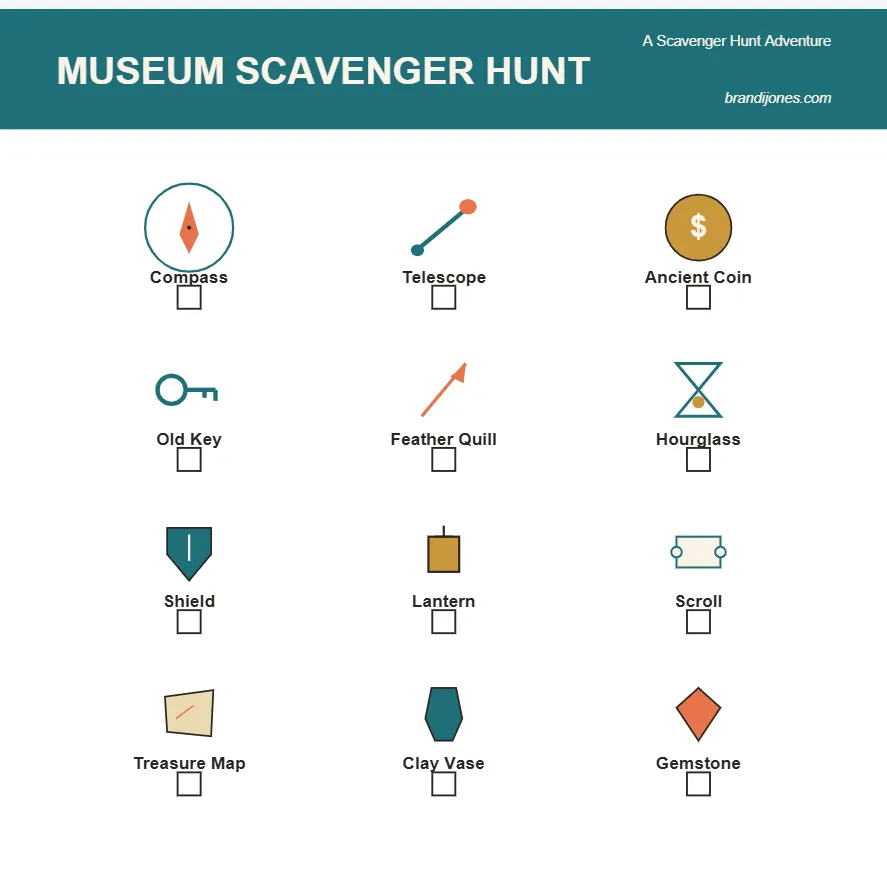
Here’s what hunters will be looking for:
- Compass – a tool once used by explorers to find their way
- Telescope – for observing the stars and distant lands
- Ancient Coin – a small object that tells a big story about trade and history
- Old Key – a mysterious reminder of doors and secrets from the past
- Feather Quill – the pen of choice before modern writing tools
- Hourglass – an early way of keeping track of time
- Shield – a symbol of protection and power
- Lantern – a source of light before electricity
- Scroll – an ancient way of recording words and ideas
- Treasure Map – a guide to hidden riches and grand adventures
- Clay Vase – a functional and artistic object from centuries ago
- Gemstone – a naturally formed treasure prized throughout history
This hunt works wonderfully in history museums, cultural centers, or even at home as a themed activity, helping participants connect with objects that have shaped human civilization for generations.
Find Something That… Scavenger Hunt
For a slightly different challenge, this version of the hunt asks participants to think a little deeper. Instead of hunting for specific named items, they search for objects that match a description — encouraging observation skills, critical thinking, and a closer look at the details and meaning behind each exhibit.
Participants will be searching for something that:
- is older than 100 years
- was made by hand
- tells a story about travel
- shows a plant or animal
- was used every day, long ago
- is made of stone or clay
- comes from a faraway place
- was used to keep time
- shows a symbol of power
- was used for writing
- is part of a matching pair
- would fit in your pocket
This descriptive style of scavenger hunt is perfect for older kids, teens, and adults, as it pushes participants to read exhibit labels, ask questions, and think about the purpose and origin of what they’re looking at — rather than simply checking off a name from a list.
Why Museum Scavenger Hunts Work
Scavenger hunts like these turn any museum visit into a memorable, hands-on learning experience. They:
- Keep visitors engaged and attentive
- Encourage careful observation of details
- Make history and art approachable and fun
- Work for solo visitors, families, and groups alike
- Can be easily adapted to any museum, exhibit, or theme
Print out the free scavenger hunt sheets below, hand them out before your next museum visit, and watch curiosity take over as your group explores every gallery in search of the next find.