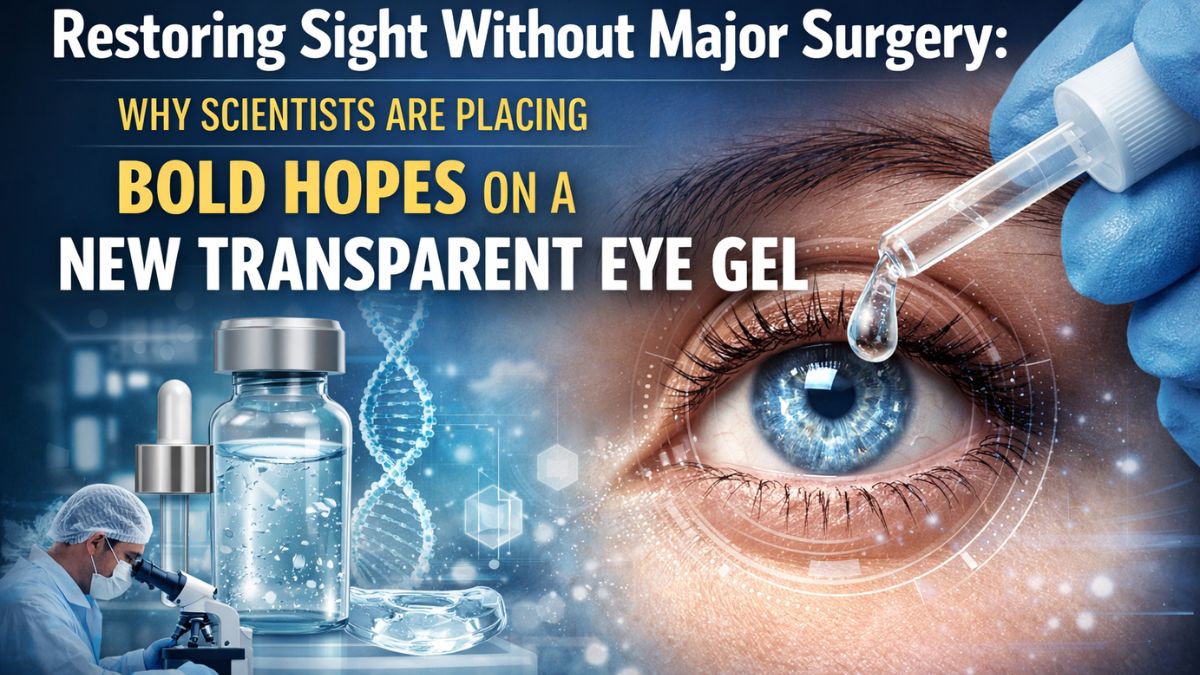
For millions of people around the world, vision loss is not just a medical condition but a life-altering experience. Reading, driving, recognizing faces, or simply enjoying natural beauty can slowly become difficult or impossible. Traditional treatments for severe eye problems often involve complex surgeries, long recovery periods, and uncertain outcomes. This is why the scientific community is paying close attention to a groundbreaking innovation: a new transparent eye gel that could help restore sight without the need for major surgery. Researchers believe this development could redefine how vision disorders are treated in the coming decades.
The Growing Global Burden of Vision Loss
Vision impairment affects people of all ages, but it becomes more common as populations age. Conditions such as cataracts, retinal damage, corneal injuries, and degenerative eye diseases are rising worldwide. While modern medicine has made significant progress, many treatments remain invasive, expensive, and inaccessible to large sections of society. In developing regions especially, limited access to advanced surgical facilities leaves millions untreated. Scientists see the transparent eye gel as a potential solution that could bridge this gap and offer a safer, simpler approach to restoring sight.
Understanding the Concept of a Transparent Eye Gel
At first glance, the idea of placing a gel inside the eye may sound unsettling. However, this eye gel is not an ordinary substance. It is designed to closely mimic the natural properties of the eye’s internal structures, particularly the vitreous humor, the clear gel-like material that fills the space between the lens and the retina. Over time, the natural vitreous can degrade, shrink, or become cloudy, leading to vision problems. The new transparent eye gel is engineered to replace or support this structure while remaining optically clear and biologically compatible.
Why Avoiding Major Surgery Matters
Eye surgeries, although often effective, come with risks. Infection, inflammation, retinal detachment, and long recovery times are genuine concerns. For elderly patients or those with other health conditions, surgery may not even be an option. The promise of an eye gel lies in its minimally invasive nature. Instead of extensive surgical procedures, the gel can potentially be introduced through small injections, reducing trauma to the eye. This approach not only lowers medical risks but also shortens recovery time, allowing patients to return to daily life more quickly.
The Science Behind the Innovation
The transparent eye gel is the result of years of interdisciplinary research combining materials science, biology, and ophthalmology. Scientists have focused on creating a substance that is stable, flexible, and long-lasting while maintaining perfect transparency. It must also interact safely with delicate eye tissues without triggering immune reactions. Early laboratory studies and animal trials have shown promising results, with the gel maintaining clarity and structural integrity over extended periods. These findings have encouraged researchers to move closer to human clinical trials.
Potential Applications Across Eye Conditions
One of the most exciting aspects of the transparent eye gel is its versatility. Researchers believe it could be used to treat multiple vision-related conditions. In cases of retinal detachment, the gel may help support the retina and keep it in place during healing. For patients with vitreous degeneration, it could restore internal eye structure and improve visual clarity. There is also hope that it could aid in drug delivery, acting as a carrier that slowly releases medication directly inside the eye, improving treatment efficiency for chronic eye diseases.
A Patient-Centered Breakthrough
Beyond scientific achievement, what truly drives excitement is the potential impact on patients’ lives. Vision loss often leads to loss of independence, emotional distress, and reduced quality of life. A treatment that avoids major surgery could be less intimidating, encouraging more people to seek help early rather than delaying care out of fear. For patients who are not candidates for surgery, this eye gel could offer a second chance at improved vision and renewed confidence in everyday activities.
Challenges and Questions Still Ahead
Despite the optimism, scientists remain cautious. Developing a medical innovation is a complex process, and many questions still need answers. Researchers must ensure that the gel remains stable inside the eye for many years without breaking down or causing side effects. Long-term safety, compatibility with different eye conditions, and effectiveness across diverse patient groups are critical factors. Regulatory approval will also require extensive clinical trials to demonstrate that the benefits clearly outweigh any risks.
Ethical and Accessibility Considerations
Another important discussion surrounding the transparent eye gel involves accessibility. Breakthrough medical technologies often come with high costs initially, making them available only to a limited population. Scientists and policymakers are already considering ways to ensure that this treatment does not become a luxury reserved for a few. If produced at scale and distributed responsibly, the eye gel could become a cost-effective alternative to surgery, benefiting healthcare systems and patients alike.
How This Innovation Could Transform Eye Care
If successful, the transparent eye gel could mark a shift in how eye diseases are managed. Instead of relying heavily on surgical interventions, ophthalmology could move toward regenerative and supportive treatments that work in harmony with the body. This would align with broader trends in medicine, where minimally invasive therapies are increasingly preferred. Eye care clinics of the future may focus more on preventive and restorative treatments rather than complex surgical procedures.
Voices of Hope from the Scientific Community
Many researchers involved in this project describe it as one of the most hopeful developments of their careers. While they emphasize the need for careful testing, their optimism is rooted in solid scientific evidence. The ability to restore or preserve vision using a transparent gel represents not just a technical achievement but a humanitarian one. It reflects a growing commitment within science to improve quality of life, not just extend it.
The Road to Human Trials and Beyond
Human clinical trials will be a defining milestone for the transparent eye gel. These studies will evaluate how real patients respond to the treatment, how long the effects last, and whether vision improvements are consistent. Positive trial results could lead to regulatory approval and eventual integration into standard eye care practices. Even if refinements are needed, the knowledge gained from these trials will advance understanding of eye biology and treatment strategies.
A Future Where Sight Loss Is Less Final
For decades, vision loss has often been seen as an irreversible condition, especially when linked to aging or severe injury. The transparent eye gel challenges this belief. It suggests a future where losing sight does not necessarily mean losing hope. Instead, it opens the door to treatments that are gentler, safer, and more accessible. For patients and their families, this possibility alone is transformative.
Conclusion: A Clear Vision for Tomorrow
The idea of restoring sight without major surgery once sounded like science fiction. Today, thanks to the development of a transparent eye gel, it is becoming a realistic goal. While challenges remain, the scientific progress made so far offers genuine hope. This innovation represents a blend of advanced research and compassionate care, aiming to protect one of our most precious senses. As studies continue and knowledge grows, the transparent eye gel may well become a symbol of a new era in vision science, where clarity, safety, and human well-being come together.
FAQs
Q1. What is the new transparent eye gel?
It is a specially designed, clear gel that mimics the eye’s natural vitreous and may help restore or support vision without major surgery.
Q2. How is this eye gel different from traditional eye surgery?
Unlike complex surgeries, the gel can potentially be applied in a minimally invasive way, reducing risks, pain, and recovery time.
Q3. Who could benefit most from this innovation?
People with age-related vision problems, retinal damage, or those who cannot undergo major eye surgery may benefit the most.