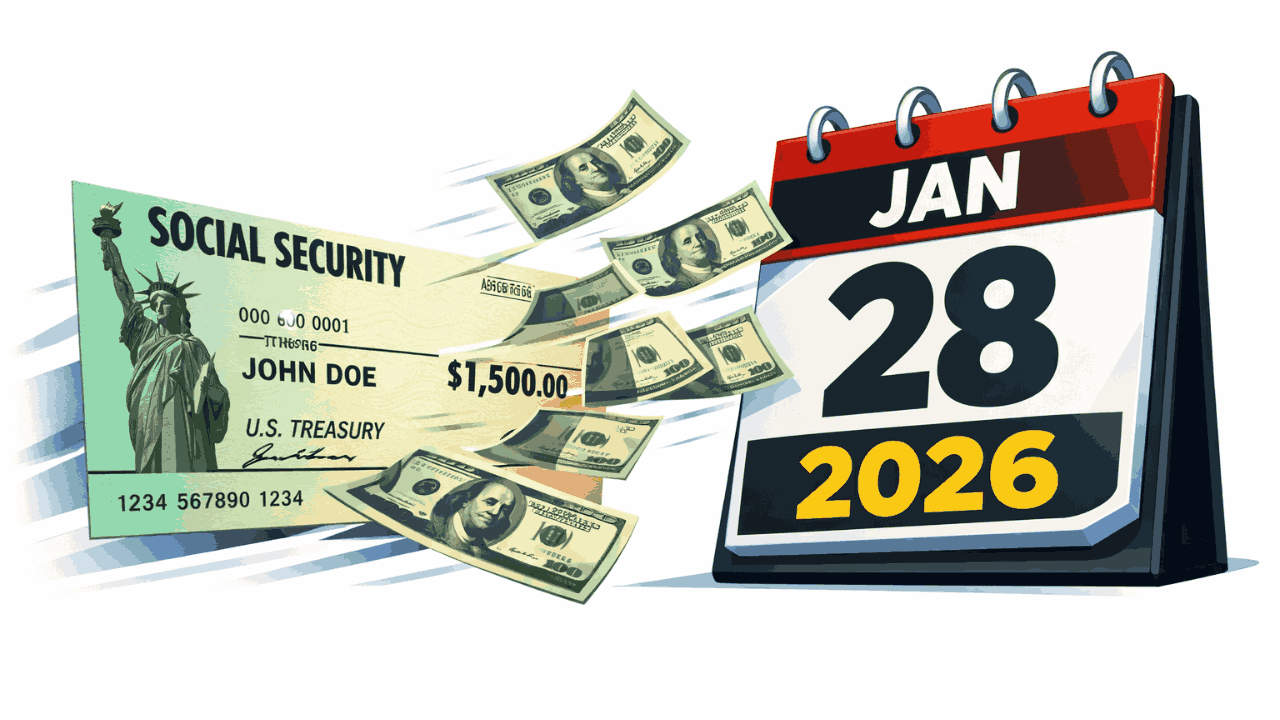
Social Security payments up to $5,181 arriving January 28 2026: As January draws to a close, many families will see a welcome deposit in their accounts on January 28, 2026 – the final Social Security payment of the month. This Wednesday payment is for retirees born between the 21st and 31st of the month, and for those who waited until age 70 to claim benefits, the maximum monthly amount has increased to a record $5,181.
Everyone is also feeling the effects of the 2.8% COLA this month, which has resulted in an average increase of approximately $56 in checks to help offset rising prices. Additionally, SSI recipients will benefit from a calendar quirk: because February 1st falls on a Sunday, the February SSI payment will arrive early on January 30th. This might seem like a “double payment” month, but it’s simply the February payment arriving ahead of schedule. For those receiving both Social Security and SSI, keeping track of these dates is crucial for proper budgeting. A quick check on the “My Social Security” portal can clear up any confusion and help you stay financially stable even in the middle of winter.
Social Security payments in January 2026: who gets paid on January 28
Every month, Social Security keeps nearly 74 million Americans on steady financial footing, from retirees and survivors to disabled workers who rely on these payments to cover everyday needs. To keep everything running smoothly, the Social Security Administration spreads payments across the month based on birth dates rather than sending everyone’s money at once. In January, those born between the 1st and 10th saw their deposits arrive on January 14, followed by January 21 for birthdays from the 11th through the 20th.
The final round lands on January 28 for beneficiaries born between the 21st and 31st. This last payout also includes retirees at the very top of the benefit scale, with maximum monthly checks reaching $5,181 for those who delayed claiming until age 70 after long, high-earning careers. While most people receive less, the January 28 deposit is still a key moment for millions of households planning their budgets. For those using direct deposit, the money usually shows up early in the morning, while mailed checks may take a little longer depending on where you live.
COLA increase explained: how much bigger checks are in 2026
Starting with their January payments, Social Security and SSI recipients are seeing the effects of a 2.8% cost-of-living adjustment (COLA) quietly included in their monthly checks. This COLA is intended to help benefits keep pace with everyday inflation, especially as essential expenses like groceries, rent, utilities, and healthcare continue to rise.
The Social Security Administration estimates that the average recipient will receive approximately $56 extra per month in 2026, a small but significant boost for those living on a fixed income. While many seniors say this doesn’t fully keep up with the true increase in the cost of living, the increase still provides some relief. There’s no separate deposit to look for with the COLA—the increase is automatically included, so anyone who has received their January payment has already seen this change reflected in their account.
SSI Payment Timing in January 2026: Why Some Recipients Were Paid Early
SSI follows its own calendar, separate from regular Social Security retirement benefits, and that difference can easily catch people off guard. These payments are usually sent on the first of the month, but when that date lands on a weekend or a federal holiday, the deposit is moved up. For January 2026, SSI recipients actually received their payment early—on December 31, 2025—because January 1 is a federal holiday.
That timing often causes confusion and can make it feel like extra money showed up out of nowhere. Since that January payment already went out, there is no SSI deposit on January 1 itself. The next payment covers February, and it also arrives ahead of schedule. With February 1 falling on a Sunday, the February SSI payment is set for Friday, January 30. As a result, some SSI households will see two deposits during January, even though each one is simply an on-time payment for a different month.
Why some beneficiaries receive two or even three payments in a single month
The most challenging situations arise for individuals who receive both SSI and regular Social Security benefits. Due to calendar variations, these beneficiaries may receive multiple payments in their accounts during certain months.
In months like October and December, some individuals receive three payments:
Their regular SSI payment at the beginning of the month
Their Social Security retirement or disability payment, which typically arrives on a Wednesday
The following month’s SSI payment, which is paid early at the end of the current month
This does not mean that beneficiaries are receiving extra payments. It is simply a scheduling adjustment made to avoid weekends and holidays. However, financial planners warn that these minor timing discrepancies can create budgeting difficulties, especially for low-income families who rely heavily on SSI.
The SSA publishes the complete 2026 SSI payment schedule online so that recipients can plan ahead and avoid the stress of unexpected payment gaps or receiving multiple payments at once.