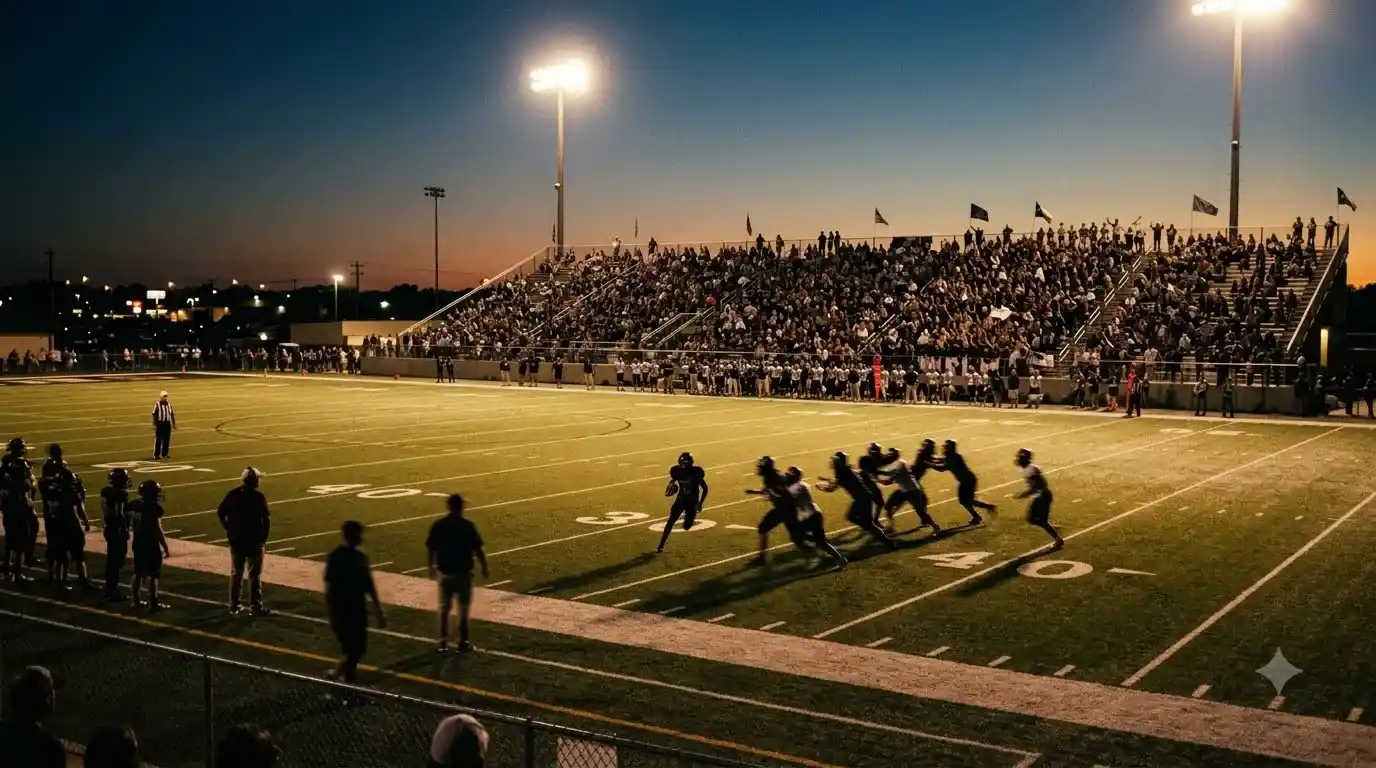
It’s football time in Texas again, and this week that phrase carries a little extra weight in East Texas. Tyler High School’s Lions are set to host the Marshall Mavericks in a rivalry that stretches back to 1908 — but the game itself isn’t the only story worth telling. The more revealing storyline is why the matchup got moved off its original date in the first place, and what that shift says about the state of high school football across Texas right now.
While national coverage of “football season” tends to fixate on the NFL’s marquee Sunday matchups, the version of the sport that actually shapes daily life in towns like Tyler and Marshall is played on Friday nights under stadium lights that have hosted the same rivalry for well over a century. This year, though, that Friday night tradition briefly wobbled — and the reason is a story most of the wire coverage is skipping entirely.
The Schedule Change Nobody’s Talking About
The Lions-Mavericks game was originally slated for its traditional Friday slot. Instead, it’s being played on Thursday. The reason isn’t weather, television, or playoff positioning — it’s a shortage of certified officials across East Texas. That’s a quieter, less glamorous storyline than a rivalry renewal, but it’s arguably the more important one for anyone trying to understand where Texas high school football is headed.
Officiating shortages have been building for years across youth and scholastic sports nationally, driven by a mix of retiring veteran referees, fewer younger officials entering the pipeline, and rising reports of abuse directed at referees from parents and fans. Texas, with its enormous volume of high school football — the University Interscholastic League (UIL) oversees well over 1,200 member schools fielding football programs — is exactly the kind of state where a modest dip in officiating numbers creates a visible ripple effect. When there aren’t enough crews to cover every Friday slate, something has to give: games move to Thursdays, kickoff times shift earlier, or districts get creative with doubling up officiating crews across multiple games in a single night.
For a casual fan, a day-of-week change might look like a footnote. For athletic directors, it’s a logistical puzzle involving school buses, concession staffing, marching band rehearsal schedules, and — in towns where the high school game is a genuine economic driver — local businesses that plan their week around Friday night traffic. A Thursday game changes foot traffic patterns for the diners, gas stations, and gear shops that count on football season for a meaningful chunk of their fall revenue.
A Rivalry Deep Enough to Survive a Date Change
None of that logistical shuffling seems to have dampened the intensity of the matchup itself. Tyler and Marshall have been playing each other since 1908, with Tyler holding a decisive edge in the century-plus series. That kind of longevity is rare even by Texas standards, where realignment, district shuffling, and shifting enrollment numbers regularly break up rivalries that once looked permanent. The fact that these two programs have kept meeting on and off for more than 115 years — even while spending stretches in different districts — reflects just how deeply football is woven into the regional identity of East Texas.
Recent history between the two programs has been especially tight. The last two meetings in Tyler were decided by a combined margin that would make any coach’s stomach churn: one game went to five overtimes before Tyler pulled it out, and the following year Marshall answered with a last-minute score and a two-point conversion to steal the win. Games like that don’t just end rivalries or extend them — they define eras of a rivalry, giving fans specific moments to argue about for years.
This season adds another layer of intrigue. Tyler is breaking in a new starting quarterback for the first time in several years after its previous signal-caller moved on to college football, which means both fan bases are watching not just for a rivalry result but for an early read on how the Lions’ offense will look under new leadership. Marshall, for its part, arrives with a program that Tyler’s own coaching staff has publicly credited as well-built and well-coached — the kind of respectful, guarded praise that usually signals a coach expects a genuine fight, not a formality.
Why This Matters Beyond One County
It’s tempting to treat a single Thursday-night rivalry game as a hyperlocal curiosity, but the underlying trend — officiating shortages reshaping when and how games get played — is a statewide and increasingly national issue. The National Federation of State High School Associations has flagged official shortages as a persistent challenge across multiple sports for several years running, and Texas’ sheer scale means even small percentage shortfalls translate into hundreds of games affected statewide over a season. When a shortage forces schedule changes in a market as football-obsessed as East Texas, it’s a signal that the infrastructure supporting the sport — not just the athletes playing it — deserves more attention than it usually gets.
That’s the piece of this story that outlets chasing the game recap will likely never get to: the people in black-and-white stripes are just as load-bearing to Friday Night Lights culture as the players themselves, and their numbers are thinner than most fans realize. Texas high school football’s mythology tends to center on quarterbacks, coaches, and stadiums, but the officiating pipeline is the quiet infrastructure that makes the entire weekly ritual possible in the first place.
What to Watch For
For fans following the Tyler-Marshall game and the broader season, a few things are worth tracking beyond the final score:
- How districts respond to future officiating gaps. If Thursday shifts become more common rather than a one-off fix, it could reshape scheduling norms — and local business patterns — across multiple UIL classifications, not just in East Texas.
- How Tyler’s new starting quarterback performs against a rival that knows the program well. Early-season rivalry games are often a truer stress test than a season opener against an unfamiliar opponent.
- Whether the series’ recent trend of one-score, nail-biting finishes continues. Two straight games decided by a combined handful of points suggest this rivalry has entered a genuinely competitive stretch rather than a lopsided one.
The Takeaway
The headline is simple: it’s football time in Texas, and the Lions are hosting the Mavericks in a rivalry with more than a century of history behind it. But the more useful story for readers who want to understand Texas high school football in 2026 isn’t the final score — it’s the fact that even the state’s most tradition-bound sporting rituals aren’t immune to the same behind-the-scenes labor shortages affecting other corners of American life. Fans who want to see Friday nights stay on Friday nights might do well to pay attention to how their local UIL districts are recruiting and retaining officials, not just how their team is recruiting players. The scoreboard will settle the rivalry. The officiating pipeline will decide whether games like this one keep happening on schedule at all.