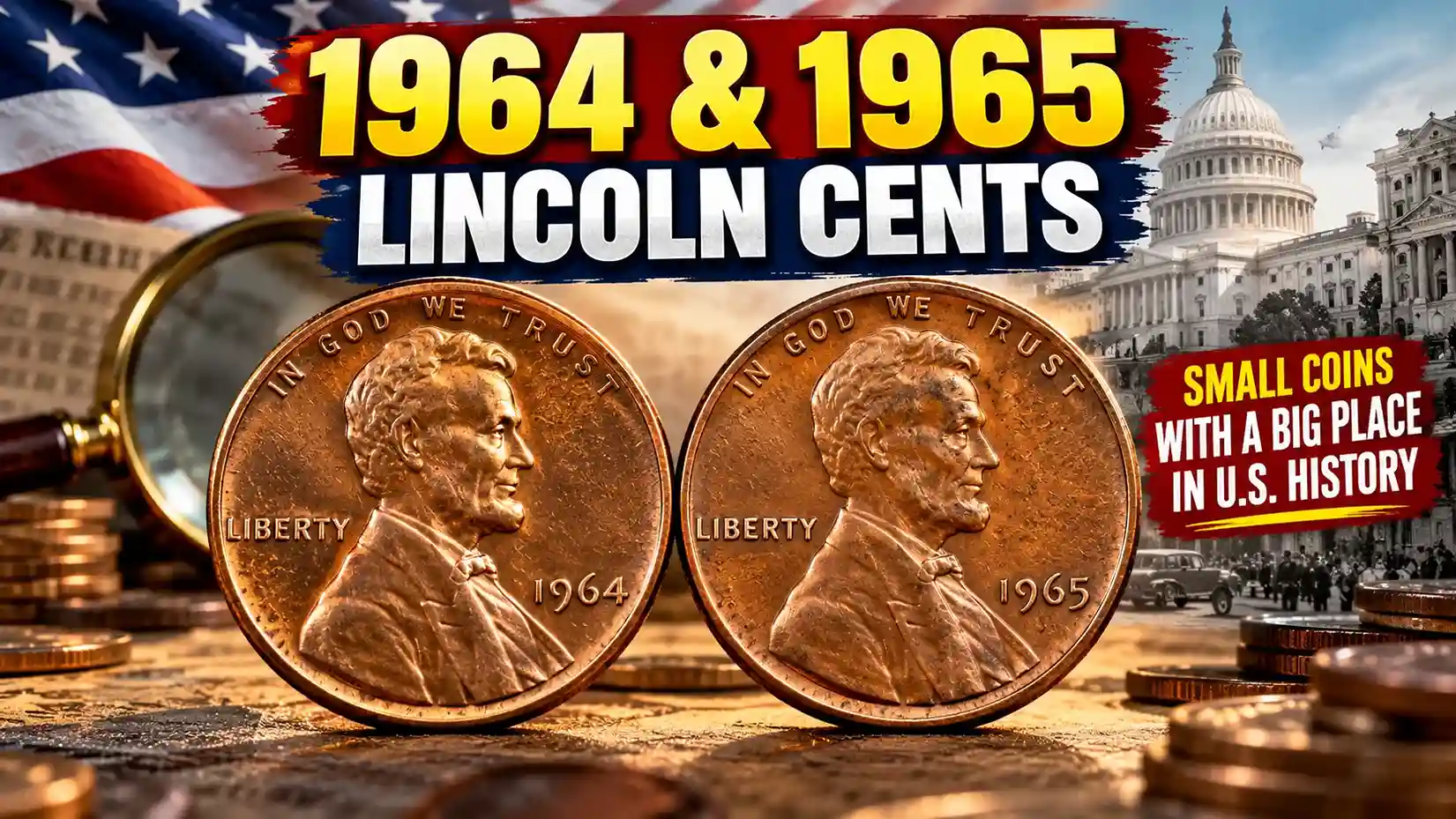
At first glance, a 1964 Lincoln cent and a 1965 Lincoln cent may look like ordinary pennies. They are small, familiar, and were produced in enormous numbers. But for collectors, these two dates represent an important moment in the history of U.S. coinage.
The early 1960s were a period of change in America. The country was dealing with rising demand for coins, changing metal prices, and a growing shortage of circulating coins. The U.S. Mint had to find ways to keep enough pennies and other denominations in everyday circulation.
That makes 1964 and 1965 Lincoln cents interesting not simply because of their face value, but because of the history surrounding them.
What Are 1964 and 1965 Lincoln Cents?
The Lincoln cent features President Abraham Lincoln on the obverse, a design that had been used on the one-cent coin since 1909.
The 1964 Lincoln cent was struck using the traditional bronze composition, which was primarily copper with a small amount of tin and zinc. The 1965 Lincoln cent also belongs to the bronze-cent era.
Both coins carry a familiar design: Lincoln’s portrait on the front and the Lincoln Memorial on the reverse.
The dates are easy to overlook, which is one reason collectors often recommend checking older pennies carefully before spending them.
Why Were the 1960s Important for U.S. Coins?
The mid-1960s brought major changes to American coinage.
The United States experienced a significant coin shortage, partly connected to increased demand for coins and changes in the precious-metal market. The government responded by changing the composition of several denominations.
In 1965, the U.S. Mint introduced clad copper-nickel coins for denominations such as the dime and quarter. Silver was removed from regular circulating dimes and quarters.
The penny was different.
The cent continued to use a bronze composition during this period, making the 1964 and 1965 Lincoln cents an interesting comparison with the later copper-plated zinc cents introduced decades afterward.
How Much Is a 1964 Lincoln Cent Worth?
A common 1964 Lincoln cent is usually not a rare coin. Millions were produced, and many examples can still be found in circulated condition.
For that reason, simply owning a 1964 penny does not automatically make it valuable.
Condition is extremely important. A heavily worn example may be worth close to its face value, while a sharply preserved coin with attractive original surfaces can be more desirable to collectors.
Collectors should also look for unusual characteristics such as minting errors, varieties, strong strikes, and exceptionally high grades.
How Much Is a 1965 Lincoln Cent Worth?
The same basic principle applies to the 1965 Lincoln cent.
Most circulated 1965 cents are common. However, coins in unusually high condition, or examples showing legitimate mint errors or varieties, can attract greater collector interest.
This is where many online coin-value claims become confusing. A penny being listed online for hundreds or thousands of dollars does not mean that every coin with the same date is worth that amount.
The actual value depends on factors such as condition, rarity, variety, authentication, and collector demand.
What Should You Check on Your 1964 or 1965 Penny?
If you find one of these Lincoln cents, start with the basics.
First, confirm the date. Then examine the coin under good lighting.
Look at Lincoln’s portrait, the lettering, the date, and the Lincoln Memorial. Check for unusual doubling, missing details, strange shapes, off-center strikes, or other characteristics that appear different from a normal coin.
Do not clean the coin.
Cleaning can damage the original surface and may actually reduce collector interest. Instead, keep the coin in its original condition and compare it with authenticated examples from reputable numismatic sources.
For potentially valuable errors or high-grade coins, professional authentication and grading can provide a more reliable assessment.
Why Collectors Still Care About These Pennies
The real appeal of 1964 and 1965 Lincoln cents goes beyond their potential monetary value.
These coins circulated during a fascinating period in American history. They passed through cash registers, pockets, vending machines, and households during an era when the country’s coinage system was changing.
A penny that looks ordinary today can therefore serve as a tiny historical object.
And that’s what makes searching old Lincoln cents so interesting.
You may not find a rare treasure every time. In fact, most 1964 and 1965 pennies will be common. But checking them teaches you how to identify dates, minting characteristics, condition, varieties, and genuine errors.
So, before you throw an old penny into a jar or spend it without a second thought, take a closer look.
A 1964 or 1965 Lincoln cent may be common—but its history is anything but ordinary.
FAQs: 1964 & 1965 Lincoln Cents
1. How much is a 1964 Lincoln cent worth?
Most 1964 Lincoln cents are common and generally have modest collector value. Coins in exceptional condition or with authenticated errors and varieties can be worth more.
2. How much is a 1965 Lincoln cent worth?
Most 1965 Lincoln cents are also common. Their value depends mainly on condition, rarity, minting characteristics, and collector demand.
3. Are 1964 Lincoln cents rare?
No, the typical 1964 Lincoln cent is not considered rare. However, certain varieties, errors, and high-grade examples may be more desirable to collectors.
4. Are 1965 Lincoln cents rare?
A normal circulated 1965 Lincoln cent is generally common. Unusual mint errors, varieties, or exceptionally preserved examples may attract additional interest.
5. What are 1964 and 1965 Lincoln cents made of?
These cents belong to the bronze composition era of U.S. one-cent coins, rather than the copper-plated zinc composition used on modern Lincoln cents.
6. What should I look for on a 1964 or 1965 penny?
Check the date, overall condition, lettering, Lincoln’s portrait, the Lincoln Memorial, and the coin’s surfaces for possible minting errors or unusual characteristics.
7. Should I clean my old Lincoln cent?
No. Cleaning can damage the coin’s original surface and may reduce its desirability to collectors. It is generally better to leave an old coin in its original condition.
8. Can a 1964 or 1965 penny be worth hundreds or thousands of dollars?
Some exceptional coins, particularly authenticated errors or extremely high-grade examples, can command significant premiums. However, online listings should not be treated as proof of actual market value.
9. Does the condition of a Lincoln cent affect its value?
Yes. Condition can have a major effect on collector value, especially when comparing heavily circulated coins with coins that have retained strong original detail and surfaces.
10. Where can I get a 1964 or 1965 Lincoln cent evaluated?
For a potentially unusual or valuable coin, consider consulting a reputable numismatist or professional grading and authentication service.